Mapping Revenue Cycles from Lesson Fees to Gear Replacements in Regional Martial Arts Academies with Integrated Billing Systems
Written by Henrik Vogel · Nov 14, 2026
Mapping Revenue Cycles from Lesson Fees to Gear Replacements in Regional Martial Arts Academies with Integrated Billing Systems
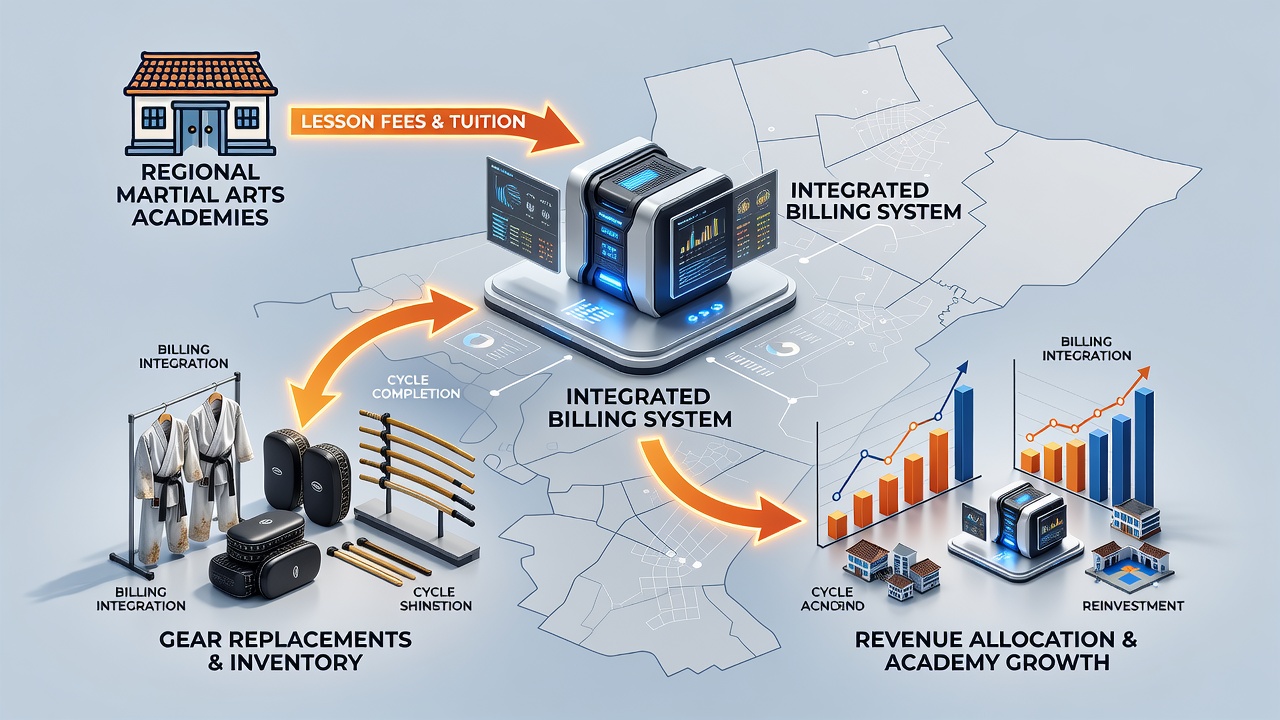
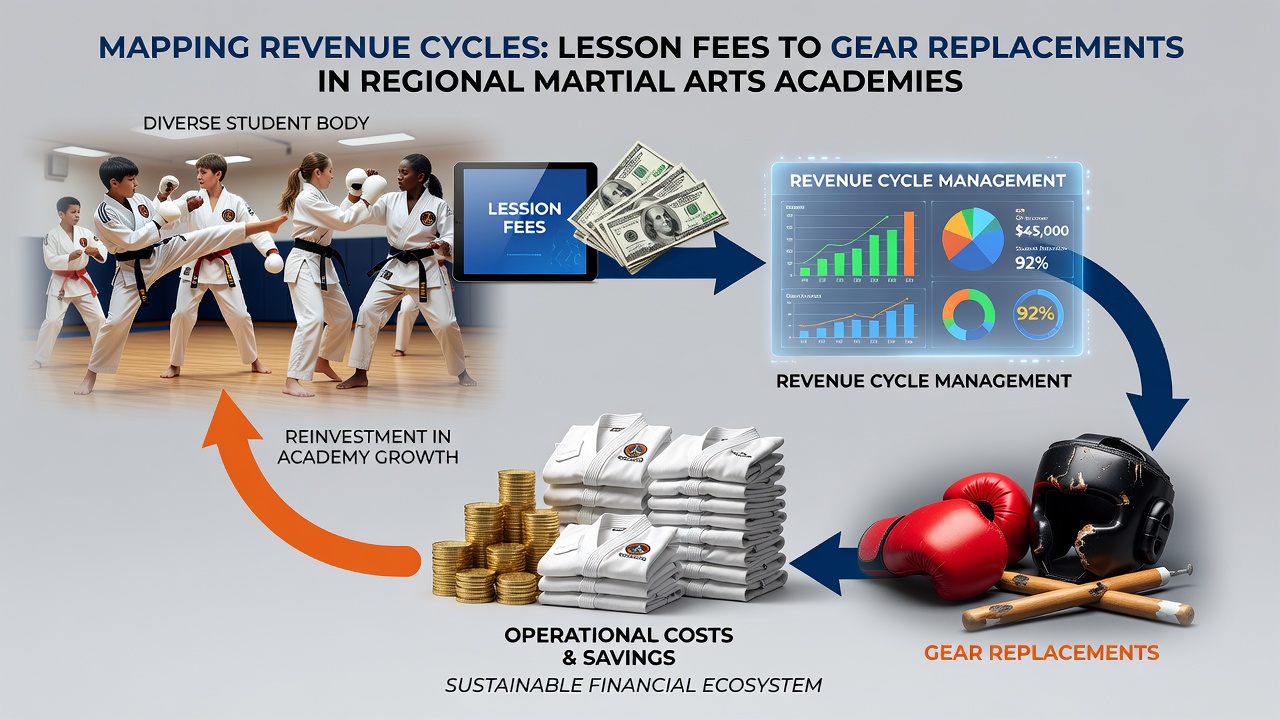
Regional martial arts academies track revenue through structured cycles that begin with recurring lesson fees and extend into periodic gear replacements, and integrated billing systems coordinate these stages by linking student accounts, inventory logs, and vendor payments in unified platforms. Data from academy networks in North America and Europe shows that monthly tuition payments often represent 60 to 75 percent of total income, while equipment sales and replacements account for an additional 15 to 25 percent during peak enrollment periods. Systems such as those used in community dojos automate the transition by generating invoices when lesson packages expire and triggering reorder alerts once protective gear reaches usage thresholds recorded in attendance logs.
Lesson Fee Structures and Initial Revenue Capture
Academies in regional circuits typically structure lesson fees around tiered memberships that cover weekly classes, belt testing, and basic facility access, and these payments enter billing platforms at the start of each cycle. Platforms record the inflow, apply proration for mid-month enrollments, and allocate portions to operating accounts while reserving segments for future equipment funds. Observers note that academies using these tools report fewer discrepancies between expected and actual collections because the software matches payment dates with class attendance data pulled from check-in systems. In November 2026, several federations across Canada plan to align their fiscal year-end reporting with updated billing integrations that will flag overdue accounts automatically before holiday breaks disrupt collection patterns.
Transition Points to Gear Replacement Cycles
Once lesson revenue stabilizes, the cycle shifts toward gear management where student progress triggers replacement needs for items such as gis, gloves, and headgear, and integrated platforms connect these events by monitoring wear metrics entered by instructors during sessions. When a student advances to a new rank, the system cross-references the purchase history stored in the same database and suggests or processes orders for upgraded equipment that meets federation standards. This linkage prevents separate manual tracking because purchase orders flow directly from the student profile into supplier interfaces, with payments deducted from prepaid balances or added to next-month invoices. Research from athletic administration studies indicates that academies employing such connections reduce inventory waste by aligning replacements more closely with actual usage rather than fixed calendar schedules.
Integrated Billing Mechanisms Across Regions
Platforms deployed in academies throughout the Midwest United States and parts of Australia synchronize lesson fee collections with gear procurement by maintaining a single ledger that updates in real time, and this approach allows administrators to view net revenue after supplier payouts without switching between separate accounting programs. When a replacement order processes, the software adjusts the student account balance, issues a receipt, and logs the transaction for compliance reports required by local sports oversight bodies. Those who manage multiple locations find that centralized dashboards reveal seasonal spikes, such as increased gear demand following summer intensive programs, which then inform inventory purchases scheduled months ahead. A report from Sport Canada highlights how similar digital coordination in community sports programs has supported consistent cash flow tracking across equipment categories without requiring additional staff time for reconciliation tasks.
Handling Recurring Contributions and Vendor Payouts
Billing integrations extend beyond direct fees and sales to incorporate recurring contributions from family accounts or local sponsors, and these funds often offset costs associated with bulk gear orders placed at volume discounts. The system schedules automatic transfers to vendors once thresholds like minimum order quantities are met, while maintaining audit trails that satisfy requirements from organizations such as the Australian Sports Commission. Academies report that this automation aligns payout timelines with incoming revenue streams, reducing the lag between lesson collections and equipment restocking that previously disrupted training continuity. When November 2026 arrives, several regional networks expect to test enhanced modules that predict gear replacement volumes based on enrollment trends captured over the prior 18 months of data.
Compliance and Reporting Benefits in Multi-Site Operations
Regional academies operating across state or provincial lines rely on these platforms to generate standardized reports that aggregate lesson fee totals with gear transaction details, and the unified output supports filings for nonprofit status or grant eligibility. Automated categorization tags each entry as either instructional revenue or equipment expenditure, which simplifies reviews by external auditors who examine year-over-year patterns. Evidence from university-led examinations of youth sports finance shows that organizations using integrated tools experience shorter audit cycles because source documents remain linked within the database rather than scattered across email threads and paper receipts. This structure also accommodates variations in tax treatment between regions, as the software applies location-specific rules during transaction processing.
Conclusion
Mapping revenue cycles from lesson fees to gear replacements through integrated billing systems provides regional martial arts academies with connected records that span student enrollment through equipment lifecycle management, and ongoing platform refinements continue to align these processes with evolving operational needs observed in multiple countries. The approach ensures that financial data remains traceable from initial collection points to final vendor settlements without fragmenting across disconnected tools.